Last updated 2026-08-18
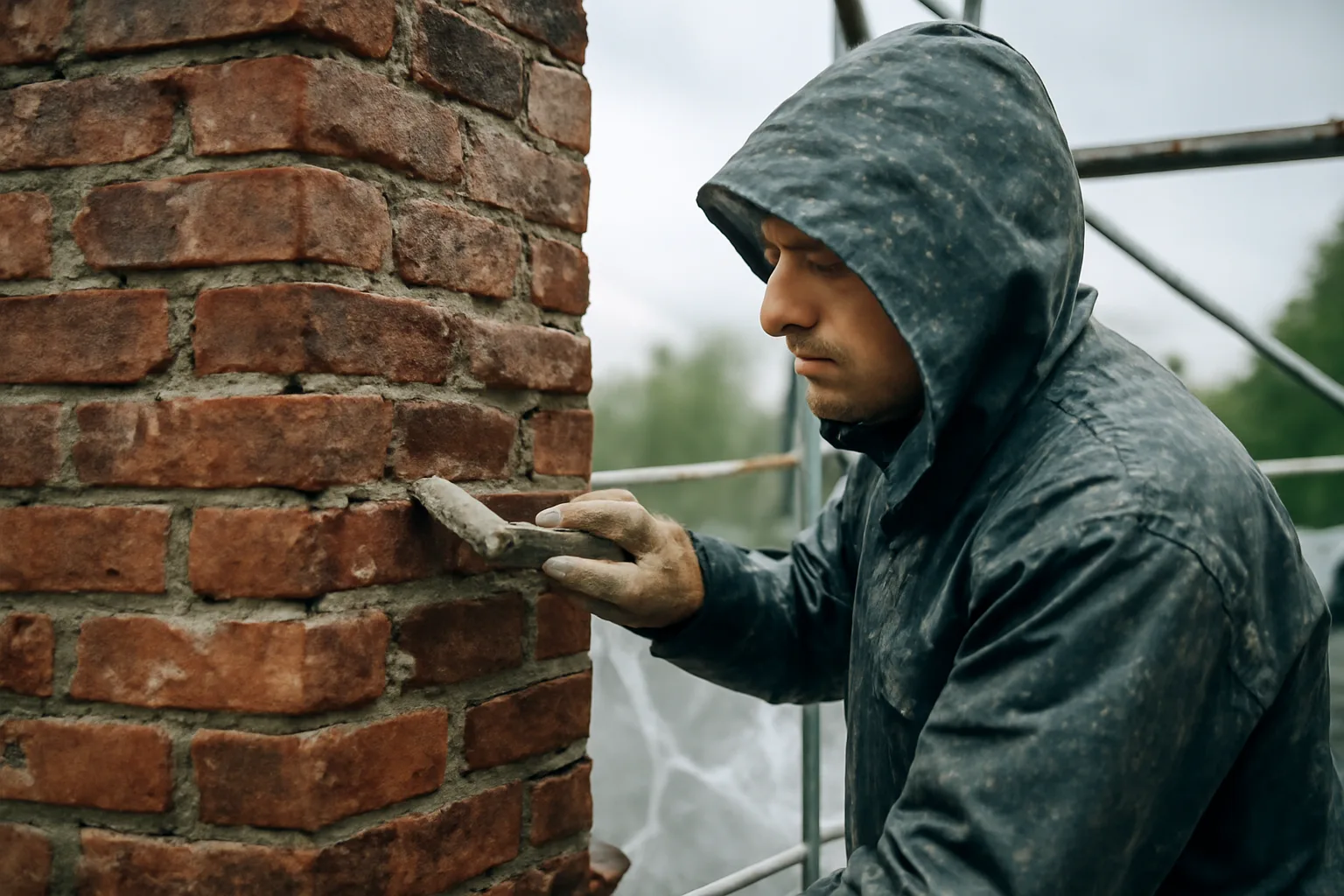
TL;DR
Yes, if you bid tuckpointing on a project totaling $10,000 or more, Alaska requires a state contractor registration. There is no separate tuckpointing license. Most tuckpointing contractors register as specialty contractors with a masonry classification. Below $10,000, state registration generally does not apply, but local tax and business rules may still bite.
Do you need a license for tuckpointing in alaska?
You need a state contractor registration for most paying tuckpointing work in Alaska, not a separate tuckpointing license. The controlling law is AS 08.18.011. It says a person "may not submit a bid or work as a contractor" unless registered under that chapter [1]. There is no Alaska trade exam, no tuckpointing board, and no masonry-only license in state code. The state calls it a registration and polices it through the Division of Corporations, Business and Professional Licensing.
The practical cutoff is $10,000. Alaska Statutes 08.18.161 lists exemptions, and the one that matters for small repointing work is the small-project cutoff [2]. If your entire contract with the property owner is under that number, the state registration requirement generally does not apply. If you split a $25,000 job into three invoices to stay under the line, you are not exempt. The department and courts look at the real project value.
Working as an employee for a registered contractor does not require your own registration. If you are an hourly mason on someone else's payroll, the company carries the registration, bond, insurance, and tax obligations. You only need your own registration when you bid work in your name, sign contracts, or subcontract tuckpointing to others.
Does the $10,000 threshold apply to every tuckpointing project?
The threshold is not a revenue cap. It is per project, per contract. A single chimney repointing at $9,800 may sit below the line. Two separate $9,000 jobs for different owners in the same month are still two projects. One owner with one home and three $9,000 change orders is one project over the line.
Read AS 08.18.161 fully before relying on the small-project exemption [2]. The statute also exempts owners doing work on their own property, certain agricultural or mining work, and some federal or state work. If your tuckpointing is on a building you own and lease out, the owner exemption may not protect you when you are acting as a commercial operator. The division's staff will not give you a private letter ruling over the phone. They will point you to the statute and the current application instructions.
For out-of-state tuckpointing contractors chasing one Alaska job, the same registration threshold applies. An Anchorage condominium board or a Fairbanks property manager will usually ask for your Alaska contractor registration number before they sign anything. Do not wait until you have a signed contract to file. The filing time is part of your first-year schedule, and the state does not guarantee a same-week turnaround.
Where does tuckpointing fit in Alaska contractor categories?
Alaska law uses two main categories for this kind of work. General contractor and specialty contractor. Tuckpointing falls under the specialty contractor side because it is one trade, masonry repair. A specialty contractor may perform work in only one specialty, while a general contractor may perform work in multiple trades [3]. Some contractors choose a general registration even for tuckpointing because they also replace lintels, add flashing, or bid whole-building envelope work. That is a business scope decision, not a license quality decision.
The state does not publish a separate tuckpointing endorsement. The application asks you to list a classification. Masonry, brick, block, and stone repair have been the relevant classification for tuckpointing. Check the current specialty list on the division's construction contractor forms before you file, because classifications get reworded.
If you only do tuckpointing and minor mortar repair, start with specialty. You can add a general registration later if your scope grows. In Alaska, thin labor and short summers punish generalists who try to be everything. Pick the narrowest registration that fits your first-year work.
What paper, bond, insurance, and tax do I need for tuckpointing in Alaska?
Before you file, get an Alaska business license. The state treats a business license as separate from a contractor registration [6]. Your local municipality may add its own sales tax certificate or business tax account. Anchorage, Juneau, and Fairbanks all have local requirements. Do not assume the state filing covers them.
The contractor registration application goes through the Division of Corporations, Business and Professional Licensing. You name a responsible party, the classification, and your business entity. You must file a surety bond with the department [4]. The state sets fees by regulation, not by the statute itself, and the dollar amount moves [5]. Call or check the division fee schedule for the current price before you budget.
You also need proof of general liability insurance in amounts the state requires, and workers' compensation if you have employees. Owner-only operators sometimes think workers' comp does not apply. Alaska's Division of Workers' Compensation treats the line differently than some lower 48 states, so verify your status before you start [10]. A wrong assumption here can be five figures.
Do not buy a bond before the division tells you the current form and amount. Surety bonds for contractors in Alaska are not expensive compared to California or Arizona, but the bond form matters. A generic bond from an online surety may be rejected if it does not match the state form.
How do I choose a specialty or general contractor registration in Alaska?
Start from a simple question. Will you sign contracts only for tuckpointing, repointing, and mortar matching? Then specialty. Will you regularly take on lintel replacement, parapet rebuilding, flashing, caulking, and brick veneer? A general contractor registration may be the better fit.
The division does not make you take an exam for either path. This is not a trade competency license. It is a business and consumer protection registration. That means the paper path is about financial responsibility, insurance, bond, and entity filing, not about proving you can cut joints.
If you already hold an Alaska general contractor registration, you do not need a second specialty registration just for tuckpointing. If you hold a specialty masonry registration, do not bid a job that includes significant structural work outside that scope.
| Situation | Use this registration |
|---|---|
| Tuckpointing only | Specialty contractor, masonry classification |
| Tuckpointing plus one or two other trades | Specialty or general, ask division |
| Structural lintel, parapet, or veneer work | General contractor plus local permit |
| Under $10,000 single project | No state registration under threshold, but local rules apply |
How should first-year Alaska tuckpointing contractors plan weather, bids, and schedules?
Alaska is a seasonal masonry market. The exterior tuckpointing window is short in Anchorage and even shorter in Fairbanks. NOAA's U.S. climate normals are the source to check for freeze dates near your jobsite [9]. Mortar needs surface temperatures roughly 40 degrees Fahrenheit and rising, plus no overnight freeze during initial curing for most mixes. That pushes Southcentral exterior repointing into mid-May through late September in an average year, and the shoulder seasons are rainy.
First-year tuckpointing contractors in Alaska should build the calendar backward from that window. May to September is when exterior jobs happen. October through April is when you chase indoor work, masonry restoration in heated buildings, estimates, paperwork, and insurance renewals. The busiest crews still schedule near-freezing edge work with hoarding and heat, but that costs money a new shop often does not have.
Before you bid, inspect the actual wall. Alaska's freeze-thaw cycles break mortar joints differently than the lower 48. A wall that looks like a simple repointing job may have hidden spalling behind the outer face. Do not quote a square-foot price over the phone. Walk it, check drainage, stop the downspout leaks, then write the bid. This is also where you decide on mortar matching. A bad color match on a visible brick front in Anchorage looks worse in low-angle winter light than it does in your sample tub. If you are doing your own matching, a small color kit can shorten the trial-and-error period. TuckpointPath sells a $149 Mortar-Match plus District Kit for exactly that, but any organized mortar sample set with a scale and water-measured mix record will move you faster.
BLS tracks brickmason employment in Alaska, and the state count is small enough that one large restoration project can tighten the whole market [7].
How much does tuckpointing cost in alaska?
There is no state-published tuckpointing price schedule for Alaska. Anyone who quotes a precise Alaska square-foot rate as gospel is making it up. The closest real national data comes from Angi's tuckpointing cost guide, which reports typical repointing around $3 to $12 per square foot for standard access [8]. Alaska bids usually sit at or above the high end of that range. Freight for mortar, sand, and scaffold is expensive. Mason labor is thin. Weather adds mobilization and protection time.
For first-year budgeting, treat a modest Alaska repointing job as at least $12 per square foot, often more in Ketchikan, Juneau, or remote road-connected communities. Full restoration work with man lifts, sheeting, structural repair, and disposal can run well above $30 per square foot. Do not bid off national midpoints. Get three local quotes and study their access, disposal, and weather allowances.
The biggest Alaska-specific cost surprises are not mortar. They are scaffolding or lift rental, temporary heat, freight for materials, and disposal of old mortar and brick. A 20-foot chimney repointing in Anchorage can cost as much in access equipment as it does in labor. Put those line items in your estimate before you ask for a deposit.
How long does tuckpointing take in alaska?
Most single-chimney repointing jobs take 1 to 3 working days of production time, not counting mobilization and setup. A full home front wall with two masons and good weather can take 5 to 10 working days. A large commercial facade restoration can run two to six weeks. Those are real-world contractor estimates, not a state statistic. Alaska rarely has a published average because the number of active tuckpointing contractors is too small for a meaningful state dataset.
Weather controls the calendar more than the work itself. A job that takes three working days in July can take two calendar weeks in late September if rain delays half the days. The mortar joint must be cut, cleaned, undercut, dampened, packed, tooled, and protected. Cutting the joint takes longer than packing it. Two workers who alternate cutting and pointing can move about 30 to 60 square feet per day on straightforward brick with hand tools. That number drops hard if the joints are shallow, the brick is soft, or you are using a grinder with dust control. Jobs with scaffold, man lift, or perimeter sheeting also add setup and teardown. Bid time, not square footage.
What will Alaska confirm about tuckpointing registration, and what won't it?
Alaska has no separate tuckpointing board. The Division of Corporations, Business and Professional Licensing handles contractor registration. The department can confirm whether a contractor registration is active, what classification it holds, and whether there are open enforcement actions. It will not tell you what job price you should charge, how long your project will take, or what mortar color matches 1970s brick. That is why calling the state first thing Monday morning is less useful than reading the statute, the application, and the fee schedule.
If you are a homeowner checking a contractor, search the division's license database by registration number or business name. Ask for the registration number, more than a business card with licensed and insured. A real Alaska contractor registration number is the first thing a serious bidder will give you. Then ask for the bond and insurance certificates.
If you are the contractor, keep copies of your registration, bond rider, insurance declarations, and any business licenses. Put them in one folder. In a dispute, the state will ask for that paper, and you will not have time to find it. Keep your registrations current. Alaska can fine or suspend you for working after lapse.
Do local permits and business licenses still apply after Alaska state registration?
State contractor registration is not a building permit. For straightforward tuckpointing with no structural change, many Alaska municipalities do not require a building permit. When you remove brick, replace a lintel, change a chimney height, or touch structural masonry, the local building department may want a permit and an engineer's letter. Check before you start, not after the wall is open.
Local business license and sales tax collection are separate again. Anchorage, Fairbanks, Juneau, and many boroughs require a local business registration or tax account. Some small communities do not. If you are tuckpointing for one homeowner in a distant village, you may owe no city tax, but you still owe state sourcing rules for materials and services. Do not guess. Ask the municipality and the Alaska Department of Revenue.
The cleanest first-year setup is this order. Alaska business license first, contractor registration second, local business tax certificate third, and building permit last if the job requires one. The state contractor registration application will ask for your Alaska business license, so do not reverse the first two.
What mistakes cost first-year Alaska tuckpointing contractors money?
The biggest mistake is not the bond. It is starting a job before the registration is approved. Alaska law says you may not bid or work as a contractor without registration [1]. If you sign a contract in late April, file the same day, and buy materials, you can still be caught in the gap. File early.
The second mistake is underinsuring for access and property damage. A tuckpointing job on a second-story brick wall can drop wet mortar onto a car, a patio, or a pedestrian. Basic general liability with a low limit will not make you comfortable in that situation. Buy enough coverage for the scaffold and lift you actually use, not the minimum the state asks for.
The third mistake is using an unapproved or generic bond form. The department has a specific form and amount. Buy from a surety that has issued Alaska contractor bonds before. A rejected bond is lost time in a short season.
The last mistake is mixing your own mortar without keeping records. If the color is wrong, you will redo the work on your own dime. Keep a small batch log with sand source, cement type, lime, pigment, water, and mixing time. It saves arguments and callbacks.
How does Alaska compare to other state tuckpointing license paths?
Alaska's model is a registration threshold, not a trade exam. That makes the paper path lighter than California, where tuckpointing can fall under more detailed contractor classification rules, and similar in spirit to Arizona or Tennessee, though each state's threshold and bond differ. If you plan to chase work across state lines, read the state-specific guides. The how to start tuckpointing in alaska guide goes deeper on the first 90 days. For comparison, tuckpointing license in california explains a higher-population state with more trade subclassification, and tuckpointing license in arizona shows a different registrant class. Tennessee's path is another useful contrast tuckpointing license in tennessee. Use these to avoid importing another state's assumptions into Alaska.
What is the one purchase to make after filing as an Alaska tuckpointing contractor?
After the registration and insurance are paid, do not spend the first profit on a new van wrap. Spend it on color matching. In Alaska, muted brick tones, wet gray days, and low winter sun make a bad mortar match obvious. A $149 mortar-match kit from TuckpointPath at /start is a small line item compared with one call-back. The kit includes matched district formulas and a controlled mixing method, and it is the one physical tool I would hand a new Alaska tuckpointing contractor on day one. You can make your own, but the time you lose experimenting in a short season is not free.
Frequently asked questions
Do I need a separate Alaska license for tuckpointing if I already have a general contractor registration?
No separate tuckpointing license exists. A general contractor registration covers tuckpointing if it falls within the scope you were approved for. Confirm your classification includes masonry or exterior repair. A specialty masonry registration is enough for tuckpointing-only work. If in doubt, ask the division before you bid.
What bond amount does Alaska require for a tuckpointing contractor?
The amount is set by current regulation, not by a fixed national number. Alaska statutes require a surety bond filed with the department. The actual dollar amount changes. Check the division's current fee and bond schedule before you apply. Do not buy a generic bond online until you have the state's approved form.
Can I tuckpoint my own home in Alaska without a contractor registration?
Generally yes for an owner doing work on their own property, but the owner exemption can fail on rental property or when you are acting as a business. If you own and occupy the home, you do not need a state contractor registration for self-performed tuckpointing. Local permit rules still apply for structural work.
How much does tuckpointing cost per square foot in Anchorage?
There is no Anchorage-specific official price table. National cost guides report $3 to $12 per square foot for standard repointing. Anchorage bids usually sit at or above $12 because of freight, labor, and weather. Get three local quotes and ask for access, disposal, and temporary heat line items.
How long does tuckpointing take on a chimney in Alaska?
A single chimney usually takes 1 to 3 working days of production time. Alaska weather can stretch that to two calendar weeks in the shoulder seasons. Larger chimneys with scaffold, brick replacement, or a flue liner insert take longer. Ask the contractor for working days versus calendar days in the written estimate.
Do Alaska tuckpointing contractors need workers' compensation if they have no employees?
The answer depends on how Alaska treats owner-operators and corporate officers, not on what you want it to be. Alaska's workers' compensation rules are stricter than some states. Call the Alaska Division of Workers' Compensation or an Alaska insurance broker before you start. Do not assume you are exempt.
Does a handyman under $10,000 need to register as an Alaska contractor for tuckpointing?
If the project is under the small-project threshold and qualifies for an exemption, no state contractor registration is required. But if you are a business, you may still need an Alaska business license and local tax account. Do not split larger projects to stay under the threshold. That is not a valid exemption.
How do I check if a tuckpointing contractor is registered in Alaska?
Use the Division of Corporations, Business and Professional Licensing license search. Ask for the Alaska contractor registration number and verify the classification. Then ask for a current insurance certificate and bond rider. A business card that says licensed is not enough.
Is tuckpointing considered general contracting or specialty contracting in Alaska?
For most tuckpointing-only businesses, it is specialty contracting with a masonry classification. If the job includes structural lintel work, parapet rebuilding, or multi-trade envelope work, a general contractor registration may be required. Check each job's scope, more than its trade name.
Do I need a local building permit to tuckpoint in Alaska?
Straightforward repointing with no structural change often does not need a building permit in most municipalities. Removing brick, replacing a lintel, or altering a parapet usually does. Check with the local building department before starting. State contractor registration does not replace a municipal permit.
Does Alaska require continuing education for tuckpointing contractors?
Alaska's contractor registration path does not use a trade exam, but you still need to renew on time and keep insurance, bond, and entity status current. Check the division's renewal notice for any current education requirements. Do not let registration lapse during summer season.
How long does mortar need to cure before rain or freeze in Alaska?
Most mortar needs protection from rain and freezing for the first 24 to 72 hours depending on mix, thickness, and temperature. Alaska shoulder seasons make this harder. Cover work with plastic and heat if needed. Follow the mortar manufacturer's data sheet for your exact mix and site conditions.
Sources
- Alaska Statutes 08.18.011: State law requires registration before a person bids or works as a contractor.
- Alaska Statutes 08.18.161: Alaska's contractor exemptions include small-project and owner work thresholds.
- Alaska Statutes 08.18.171: Defines specialty contractor and general contractor categories.
- Alaska Statutes 08.18.031: Contractors must file a surety bond with the department.
- Alaska Statutes 08.18.041: Contractor registration fees are set by regulation and subject to change.
- Alaska Division of Corporations, Business and Professional Licensing, Business Licensing: Alaska business license is separate from contractor registration; municipalities may have local tax.
- U.S. Bureau of Labor Statistics, Occupational Employment and Wages, Brickmasons and Blockmasons: BLS collects occupational wage and employment data for brickmasons and blockmasons, including state-level data.
- Angi, Tuckpointing Cost Guide: National tuckpointing cost guide reports $3 to $12 per square foot typical.
- NOAA National Centers for Environmental Information, U.S. Climate Normals: NOAA U.S. climate normals provide freeze and temperature data used to plan exterior masonry season.
- Alaska Department of Labor and Workforce Development, Workers' Compensation Division: Alaska Division of Workers' Compensation has state-specific coverage rules for owner-operators.