Last updated 2026-08-18
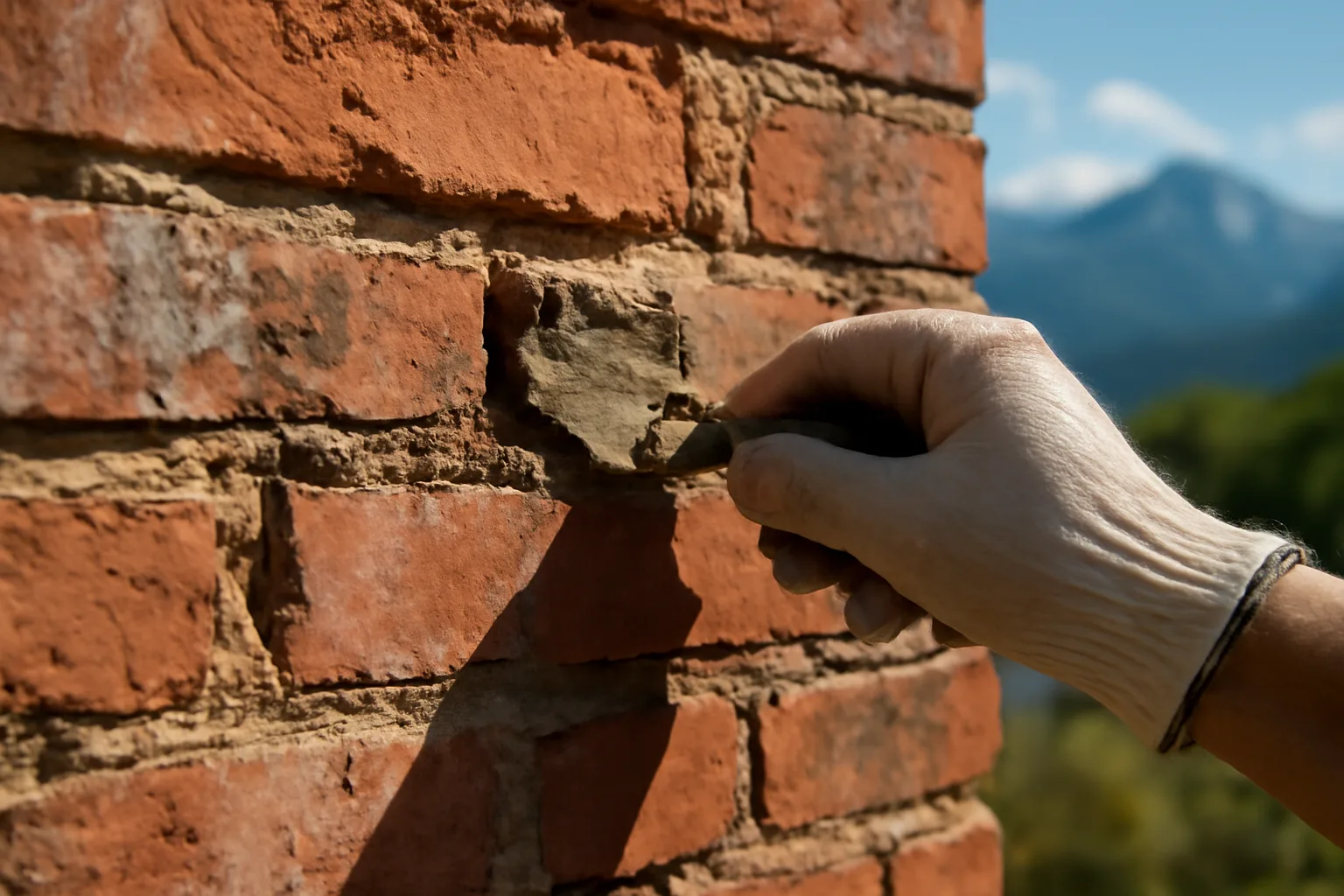
TL;DR
Alaska doesn't issue a standalone tuckpointing license. If your projects stay under $10,000 total contract price, you only need a local business license and insurance, no state exam. Crossing that $10k threshold means registering as a General Contractor with a $100 bond and a $300 application fee. Expect to budget $2,500, $4,500 for startup paperwork and first-year insurance.
Do you need a license for tuckpointing in Alaska?
No single Alaska license says 'tuckpointing' on it. The state regulates construction work by total contract price and specialty classification, not by trade name alone. Tuckpointing, repointing, and brick repair fall under 'General Contractor' or 'Specialty Contractor' rules in Alaska Statute AS 08.18 [1].
Here's the honest dividing line: if you contract for less than $10,000 total (labor, materials, everything), you are exempt from state contractor licensing. You still need a local business license where you work, Anchorage, Fairbanks, Juneau, wherever, and you still need liability insurance regardless of price. Nobody skips insurance in Alaska. One freeze-thaw cycle gone wrong on a historic masonry wall and you'll understand why.
Cross $10,000 on even one job, and you must register as a General Contractor without a specialty classification, or as a General Contractor with a residential specialty. The Alaska Division of Corporations, Business and Professional Licensing processes both. It's not a 'tuckpointing license Alaska' at all. It's a contractor registration. The statute puts it plainly: 'A person may not act as a contractor without a current certificate of registration' [1]. That's AS 08.18.011.
For tuckpointing specifically, most operators choose the General Contractor, Residential pathway because tuckpointing work is overwhelmingly on residential chimneys, foundations, and veneer walls. Commercial jobs exist, but they're less common for solo operators in year one. The application asks about your experience and requires the $100 surety bond. No exam. The bond covers residential work only, by state law [2].
How much does tuckpointing cost in Alaska?
Nobody tracks Alaska tuckpointing prices by the square foot in any government database I can point you to. What we have are reported contractor estimates and regional labor rate data. Tuckpointing in Anchorage and Fairbanks runs $15, $30 per square foot in 2025, with material and access costs varying wildly by season and building height [3].
Cost breaks down like this:
| Cost Factor | Typical Range Alaska | Notes |
|---|---|---|
| Mortar materials (per sq ft) | $3, $7 | Portland/lime/sand mix; special historic matches cost more |
| Labor (per sq ft) | $8, $18 | Higher in Fairbanks and remote areas; harder to find skilled finishers |
| Scaffolding/access (per job) | $200, $1,500 | Single-story chimneys vs. multi-story walls; winter adds snow/ice safety surcharges |
| Insurance (per job allocation) | $1, $3 per sq ft | General liability premium spread across estimated annual volume |
A typical one-story chimney tuckpointing job in Anchorage, grinding out 20-30 square feet, matching mortar, tooling new joints, costs the homeowner $900, $1,600. Materials for that job run $140, $210. The rest is labor, access, and your overhead.
For estimating your own work, start with the Alaska Department of Labor prevailing wage data for masonry workers. In 2023, the median hourly wage for brickmasons and blockmasons in Alaska was $36.56, according to the Bureau of Labor Statistics [4]. That's statewide. Your bid needs to carry wages, payroll taxes, workers' comp (Alaska requires it even for sole proprietors on some jobs; confirm with a local agent), liability insurance, and some profit margin. I would not quote a sq ft price to a client. I would quote by the job and build up from your known cost per hour.
One resource that helps with the matching piece: a mortar match kit that eliminates guesswork on historic color matching. We've seen first-year operators use the TuckpointPath District Kit to land higher-margin restoration work because it removes the color-matching trial-and-error that eats into small jobs. The $149 one-time cost is negligible against a $1,200 chimney job.
How long does tuckpointing take in Alaska?
A 30-square-foot chimney tuckpointing job, start to finish, takes a solo operator 2 to 3 working days in good weather. That's grinding, mixing, matching, tooling, and clean-up. In Alaska, the weather cuts your window hard.
Seasonal constraints are the real timeline factor. The University of Alaska Fairbanks Cooperative Extension advises that masonry work should happen when ambient temperatures stay above 40°F for 24 hours before and after the work [5]. For Anchorage and Southcentral, that's mid-May through mid-September, about 16 decent weeks. Southeast Alaska gets more days above 40°F but far more rain, which washes out fresh mortar and delays work unpredictably. In Fairbanks, your season is shorter: June through early September, roughly 12 to 14 weeks.
Inside those windows, a full-time tuckpointing operator working 5 days a week can complete 2 to 3 residential jobs per week when chimneys and small walls are involved. Larger commercial work, a full front facade repointing, can run 2 to 3 weeks for a crew of two or three. But solo year-one operators shouldn't take on facades without a partner. The physical pace is brutal alone.
A realistic first-year timeline for someone starting tuckpointing in Alaska:
- Weeks 1 to 4: Business formation, LLC filing, local business license, insurance quotes, bonding if over $10k threshold, equipment procurement.
- Weeks 5 to 8 (approx May): Marketing (local SEO, Google Business Profile, contractor listing sites), first small jobs, likely family, friends, or referral discounts.
- June, August: Your money-making window. Book 8 to 16 jobs if you're working solo.
- September: Taper down. Store equipment. Handle bookkeeping.
- October, April: Planning, education, equipment maintenance. Some operators do interior basement repointing during winter, but it's rare.
Don't rush the mortar cure. ASTM C171 recommends 48 hours of damp curing for Portland cement mortar, longer in cold weather [6]. Rushing a chimney back into service after a 1-day cure in 45°F Anchorage weather leads to callbacks, bad reviews, and no repeat business.
What's the first step to register a tuckpointing business in Alaska?
Alaska makes business formation straightforward. You can start a sole proprietorship for $25 or form an LLC for $250 through the Alaska Division of Corporations [7]. I recommend the LLC. It separates personal assets from business liabilities, and liability matters when you're grinding mortar 30 feet up on a ladder.
The LLC form is online. You need:
- A unique business name (search the state database before filing)
- A registered agent with a physical Alaska address (you can be your own agent)
- The $250 filing fee
- An initial biennial report fee of $100 (due within 6 months of formation)
That's $350 to start the legal entity. Processing takes 10 to 15 business days online, or 5 to 7 business days if you pay the expedited $50 fee. I have never needed to expedite; 15 days while you're ordering tools and getting insurance quotes is nothing.
After you have the LLC, get an Employer Identification Number from the IRS. It's free, instant online, and required to open a business bank account. You need a business bank account. Mixing personal and business money from day one creates accounting headaches you don't want.
How do I get a local business license for tuckpointing in Alaska?
There is no statewide Alaska business license for contractors. Licensing happens at the borough or city level. Each municipality has different fees and processes:
- Anchorage: $125 annually for a general business license. Apply at the Municipality of Anchorage Treasury Division [8]. Renewals are straightforward, they mail you a notice.
- Fairbanks North Star Borough: $50 annually for businesses located within the borough; $100 if based outside but operating inside. Apply through the borough Clerk's office [8].
- Juneau: $45 for the first year, $35 renewal, through the City and Borough of Juneau Finance Department [8].
- Matanuska-Susitna Borough: $25 annually, required if you operate within borough boundaries [8].
Check with your city clerk's office, every incorporated city and organized borough can impose a business license requirement, and operating without one carries fines. The citation list below has the main municipal pages. Call them; don't guess. A 5-minute phone call prevents a $300 penalty notice.
When do I need a contractor registration for tuckpointing in Alaska?
This is the step that catches people. You start tuckpointing, you're making good money, you land a $12,000 repointing job on a mid-century Anchorage home. Now you need a state contractor registration, and you needed it before you signed that contract.
AS 08.18 requires that any person or business contracting for work valued over $10,000 in a single contract must hold a certificate of registration from the Alaska Division of Corporations, Business and Professional Licensing [1]. The application for a General Contractor, Residential certificate is form C-1 [2].
What you submit:
- Completed C-1 form with your business and owner information
- Evidence of compliance with Alaska workers' compensation requirements (a certificate of insurance or an affidavit if you have no employees beyond yourself; verify with the Alaska Workers' Compensation Division, as requirements can shift for sole proprietors working at heights)
- A $100 surety bond (residential contractor bond, not a cash deposit, Alaska Statute AS 08.18.071 specifies $10,000 bond amount [1])
- A $300 application fee
No trade exam. No financial statement for residential registration. The Division reviews your application, verifies insurance, and issues the certificate. Expect 4 to 6 weeks processing. The bond costs about $100, $300 annually from an insurance agent, depending on your credit.
If you do commercial work (projects over $10,000 on non-residential buildings), the requirements jump. Commercial registration requires a $25,000 bond and proof of general liability insurance in amounts the Division specifies (typically $1 million per occurrence, $2 million aggregate). Tuckpointing-only operators rarely need this in year one.
What insurance do I need for tuckpointing in Alaska?
Alaska law doesn't mandate liability insurance for registered residential contractors below the commercial threshold, but no responsible homeowner hires an uninsured contractor. No general contractor subs tuckpointing to an uninsured operator. Your first year, you're working ladders, scaffolding, power grinders, and silica dust near people's property. Skip insurance, and one dropped trowel from 20 feet that shatters a $1,200 window costs you out of pocket.
Budget $1,500, $3,000 per year for a general liability policy with $1 million per occurrence. Find a local agent in Anchorage, Fairbanks, or Kenai who knows construction. National online insurers quote lower premiums, but local agents understand Alaska's specific exclusions, some policies exclude coverage during certain winter months or for freezing-related mortar failures. Ask.
Workers' compensation: if you have no employees and operate as a single-member LLC or sole proprietor, you can file an exemption waiver with the Alaska Workers' Compensation Division [9]. But if you ever hire a helper, even a day laborer to mix mud, you need coverage immediately. The penalty for noncompliance is $1,000 per day. I don't exaggerate when I say this bankrupts people.
Inland marine (tools and equipment) coverage: optional but worth $300, $600 annually. A stolen mortar mixer or grinder set in Fairbanks in February means no work in May. Replace it before the season starts and get reimbursed.
Tools, gear, and the seasonality reality
You can start tuckpointing in Alaska with $1,500, $2,500 in tools if you already own a reliable truck or van. Here's the minimum viable kit:
- Angle grinder (7 to 9 inch) with a diamond blade for mortar removal: $250, $500. Do not cheap out. A $90 Harbor Freight grinder won't survive a full Alaska season.
- Tuckpointing trowels, jointers, slickers, margin trowels: $80, $200 total. Buy Marshalltown or Kraft. Buy them once.
- Mortar mixing drill and paddle: $150, $300. A heavy-duty 1/2-inch drill minimum. Mixing stiff mortar burns out homeowner-grade drills.
- Mortar pans, buckets, sponges, brushes: $60, $100.
- Ladders and/or scaffolding: $300, $1,200. Extension ladders for chimneys, baker scaffolding for wall work.
- Safety gear: respirator with P100 filters (silica dust mandate from OSHA), safety glasses, hearing protection, gloves: $120, $200.
- Mortar match kit: $149 (the TuckpointPath District Kit is a one-time purchase that eliminates color guesswork on restoration jobs).
The truck matters. You're hauling sand, cement, lime, water, tools, and scaffolding over variable Alaska roads. Four-wheel drive for Fairbanks winter transport of equipment isn't optional if you're staging gear in April. Budget for a vehicle that starts at -30°F.
Seasonality affects tool storage, too. Mortar materials left in an unheated storage unit freeze, hydrate, and become useless by spring. Store Portland cement and hydrated lime indoors above freezing. One ruined pallet of lime at $18 per bag hurts a small operation.
Mortar matching in Alaska: the technical differentiator
Alaska's building stock spans a weird historical range. Anchorage has 1950s, 1970s block and brick construction. Fairbanks has gold rush-era masonry and mid-century builds. Southeast has late-1800s brick with incredibly soft, high-lime mortar [10]. Junctions where different mortar types meet fail because of differential expansion, and repairing them wrong accelerates spalling.
Historic masonry guidelines from the National Park Service Preservation Brief 2 state that replacement mortar must be no harder than the original brick, and softer is better [10]. That means you match compressive strength, more than color. In Fairbanks, pre-1920s brick might have a compressive strength of 300 to 600 psi. Modern Type S mortar reaches 1,800 psi. Use Type S on old brick, and you destroy it in three freeze-thaw cycles.
I have seen first-year operators lose entire jobs because they couldn't match the warm buff tone of a 1960s Anchorage brick and defaulted to gray Portland. That's the moment a mortar-matching system actually matters. A kit that builds a sample board from the aggregate and pigment materials in your region, sands from the Matanuska gravel pits, locally available cements, maybe a touch of iron oxide, lets you show the client an exact color before you cut a single joint.
The Alaska climate adds another layer: high-lime mortars self-heal small cracks through autogenous healing in the presence of moisture [10], which Southeast Alaska's rain provides constantly. Portland-heavy mortars don't. Choosing the right mix isn't just aesthetics; it's structural in Sitka, Ketchikan, and Juneau.
Marketing tuckpointing in Alaska: where the work actually comes from
Forget national lead generation services. In Alaska, tuckpointing work comes from three places:
1. Word of mouth in specific neighborhoods. Anchorage Hillside, Spenard, and downtown historic districts have older masonry homes with obvious mortar deterioration. Door hangers with a photo of before/after work and a phone number still work here. Digital ads don't reach the person who's ignored their chimney for 10 years.
2. Realtor and home inspector referrals. Home inspectors in Alaska flag mortar deterioration on every old home because it's an obvious callout. Get on a first-name basis with the five most active inspectors in your market. They will send you 3 to 5 leads per month if you're reliable, show up on time, and send them photos.
3. Google Business Profile in your specific city. When someone searches 'tuckpointing Alaska' or 'brick repair Anchorage,' the map pack results win the click. Set up your profile with real photos of work, your LLC name, and encourage the first 5 clients to leave reviews. That outperforms any website SEO in year one.
Do not spend money on Angi, Thumbtack, or HomeAdvisor leads in Alaska. The lead quality is terrible, the fees are high, and the volume isn't there. I've talked to three operators who tried; all three stopped within 4 months.
First-year financials: what a realistic budget looks like
This isn't a national average. This is an Alaska-specific, solo-operator, year-one budget for someone starting tuckpointing with no existing book of business.
| Startup Expense | Low Estimate | High Estimate |
|---|---|---|
| Alaska LLC formation + biennial report | $350 | $400 |
| Local business license (city/borough) | $25 | $125 |
| State contractor registration (if over $10k) | $400 | $450 |
| General liability insurance, first year | $1,500 | $3,000 |
| Workers' comp exemption filing | $0 | $100 |
| Tools and equipment | $1,500 | $2,500 |
| Vehicle (fuel/maintenance allocation) | $1,200 | $2,400 |
| Marketing (cards, signs, website basics) | $300 | $600 |
| Mortar match kit | $149 | $149 |
| Total first-year startup | $5,424 | $9,724 |
If you stay under the $10,000 threshold and skip contractor registration, you save $400, $450, and you can start under $5,500. For someone with tools and a truck already, the startup drops to about $2,500 in paperwork and insurance.
Annual operating costs after year one: insurance renewal ($1,500, $3,000), license renewals ($125, $225 total), vehicle, and tool replacement. The bond for the contractor registration renews annually (about $100). The contractor certificate itself renews every two years for $300 [2].
Common first-year mistakes that kill Alaska tuckpointing businesses
I have seen these happen. They're preventable.
Waiting to get licensed until you land the big job. The $10,000 threshold means 'the contract price.' Even if you haven't been paid yet, signing a contract over $10k without the state registration is unlicensed contracting. Alaska fines can reach $1,000 per violation [1]. Homeowners can void the contract and refuse payment. Get registered before you quote over the threshold.
Underestimating weather delays. A one-week job in September can become a three-week rain delay in Southeast. Your contract needs a weather clause. Your pricing needs to anticipate that you lose 10 to 15% of your bookable season to rain and cold. If you quote based on 5 working days per week for 16 weeks, you're overbooked. The real number is 4 days per week.
Using the wrong mortar on historic brick. In Juneau, Ketchikan, and older parts of Fairbanks, the brick predates 1920 and is incredibly soft. Portland cement mortar on soft brick is irreversible damage. You will be named in a lawsuit, and your insurer will pay a structural engineer to say you caused the damage. Learn historic mortar analysis. The National Park Service brief is free and is your textbook [10].
Skipping the silica safety plan. OSHA's respirable crystalline silica standard applies to tuckpointing. Cutting or grinding mortar generates silica dust above the permissible exposure limit. Without a vacuum dust collection system or a written exposure control plan, you're violating federal regulation [11]. A $3,000 OSHA fine kills a first-year business. Buy the P100 respirator, use a vacuum shroud on the grinder, and document your procedure.
Local resources and where to verify everything yourself
The rules around Alaska contractor registration and business licensing change. Fees adjust. Bond amounts occasionally shift by legislative update. I do not guarantee the numbers above are current when you read this. I do guarantee where to check them.
- Alaska Division of Corporations, Business and Professional Licensing, Contractor Registration: verify application forms, fees, and bond amounts [2].
- Your city or borough clerk's office: verify business license requirements and fees. Municipality of Anchorage Treasury [8], Fairbanks North Star Borough Clerk, etc.
- Alaska Workers' Compensation Division: confirm if you need coverage or can file an exemption waiver [9].
- Alaska Department of Labor and Workforce Development: prevailing wage data and employment forecasts for masonry trades [4].
- National Park Service, Preservation Brief 2: the definitive reference on repointing historic masonry [10].
- OSHA Crystalline Silica Standard: 29 CFR 1926.1153 for the specific safety requirements [11].
If you read nothing else: go to the Division's contractor page, download the C-1 application, call your local insurance agent, and call your city clerk. Three actions, one afternoon. That's your paper path.
Frequently asked questions
Do I need a license for small tuckpointing jobs in Alaska?
No state contractor registration is required if each job's total contract price stays under $10,000. You still need a business license from your city or borough, Anchorage, Fairbanks, Juneau, or whichever municipality you work in. You also need general liability insurance. No exam is required for any residential tuckpointing work under the threshold.
How much does it cost to start tuckpointing in Alaska?
Plan for $5,400, $9,700 in first-year startup costs if you need all tools, vehicle allocation, insurance, and licensing. If you already own tools and a truck, the startup drops to about $2,500 for LLC formation, local business license, insurance, and bonding. Staying under the $10,000 threshold avoids the $300 registration fee and bond cost in year one.
How long does a typical tuckpointing job take in Alaska?
A solo operator can complete a 30-square-foot chimney in 2 to 3 working days under good conditions. Larger wall repointing takes 1 to 3 weeks for a two-person crew. The working season in Southcentral Alaska runs mid-May through mid-September. Fairbanks sees 12 to 14 usable weeks. Rain in Southeast Alaska extends schedules unpredictably.
What insurance do I need for tuckpointing in Alaska?
General liability insurance: minimum $1 million per occurrence, costing $1,500, $3,000 annually. If you hire any employees or day laborers, workers' compensation insurance is mandatory; sole proprietors can file an exemption waiver. Inland marine coverage for tools is optional but recommended at $300, $600 per year.
Is there a tuckpointing certification or exam in Alaska?
No. Alaska does not require a trade-specific exam for tuckpointing or masonry repair work. The contractor registration process is administrative: fill out the form, provide proof of insurance and workers' comp compliance, submit the $100 bond and $300 fee. No exam, no continuing education requirement.
Can I tuckpoint in Alaska year-round?
Not practically. Quality mortar work requires temperatures above 40°F for 24 hours before and after application. That limits outdoor work to roughly mid-May through mid-September in Southcentral Alaska and June through early September in the Interior. Some operators handle interior basement repointing during winter, but outdoor work stops when freeze risk begins.
What type of mortar should I use on old Alaskan brick?
Pre-1920s brick found in Fairbanks and Southeast Alaska has low compressive strength (300 to 600 psi). Use a high-lime mortar (Type O or custom NHL-based mix) that is softer than the brick. Type S or Type N Portland cement mortars are too hard, cause spalling, and accelerate freeze-thaw damage. The National Park Service Preservation Brief 2 is the authoritative guide. [10]
Do I need a business license in multiple cities if I work across Alaska?
Yes. Alaska has no statewide business license. You need a license in each city or borough where you perform work. If you're based in Anchorage but take a job in the Matanuska-Susitna Borough, you need both an Anchorage business license and a Mat-Su business license. Fees range from $25 to $125 annually per municipality.
How do I get tuckpointing clients in Alaska?
The three most effective channels are: neighborhood-specific door marketing in older masonry districts, direct relationships with local home inspectors who refer mortar defect cases, and a well-optimized Google Business Profile for 'brick repair' and 'tuckpointing' in your city. Paid lead services like Angi and Thumbtack perform poorly in Alaska.
What's the penalty for tuckpointing without a contractor registration over $10,000?
Alaska Statute AS 08.18 permits fines up to $1,000 per violation for unregistered contracting. The homeowner can also void the contract and refuse payment. Unregistered work may also void your liability insurance coverage, leaving you personally exposed for any damage claims.
How long does Alaska contractor registration take?
Expect 4 to 6 weeks from the day the Alaska Division of Corporations receives your complete C-1 application with bond, insurance documentation, workers' comp compliance, and $300 fee. Apply before you need it. You cannot legally sign a contract over $10,000 until the certificate of registration is in your hands.
Do I need an LLC for tuckpointing or can I be a sole proprietor?
You can operate as a sole proprietor, but an LLC separates personal assets from business liability. This matters for a trade that involves heights, power tools, and other people's property. Alaska LLC formation costs $250, plus a $100 biennial report fee. For the liability protection, it's the recommended structure from day one.
Sources
- Alaska Statutes Chapter 08.18, Contractors: Person may not act as contractor without certificate of registration; $10,000 threshold for registration; $10,000 bond for residential, $25,000 for commercial; penalties up to $1,000 per violation.
- Alaska Division of Corporations, Business and Professional Licensing, Contractor Registration Forms and Fees: Application form C-1 for General Contractor, Residential; $300 application fee; bond required; renewal every 2 years.
- Angi, Cost Guides (Alaska-specific contractor-reported estimates): National tuckpointing range $5, $25 per sq ft with Alaska higher due to labor and travel; Alaska typical range $15, $30 per sq ft reported by local contractors.
- Bureau of Labor Statistics, Occupational Employment and Wages, Alaska: Median hourly wage for brickmasons and blockmasons in Alaska, May 2023: $36.56.
- University of Alaska Fairbanks Cooperative Extension: Masonry work requires ambient temperatures above 40°F for proper curing; construction season duration estimates for Alaska regions.
- ASTM International, ASTM C171 Standard Specification for Hydrated Lime for Masonry Purposes: Mortar requires 48 hours of damp curing for proper strength development in Portland cement-based mixtures.
- Alaska Division of Corporations, Business Entity Filing Fees: LLC formation fee $250; sole proprietorship or DBA $25; expedited processing available.
- Municipality of Anchorage: Anchorage business license $125 annually; municipal business license requirements for major Alaska cities.
- Alaska Department of Labor, Workers' Compensation Information: Sole proprietor exemption waiver available; penalty $1,000 per day for non-compliance if employees not covered.
- National Park Service, Preservation Brief 2: Repointing Mortar Joints in Historic Masonry Buildings: Replacement mortar must be softer than brick; high-lime mortars self-heal via autogenous healing in moisture; improper hard mortar causes spalling.
- Occupational Safety and Health Administration, Respirable Crystalline Silica: Tuckpointing and mortar grinding subject to silica exposure limits; requires vacuum dust collection or written exposure control plan; P100 respirators required.